1.1
Best in the room
Language classes and schoolwork filled my days. Back then I set myself one rule. Wherever I was, I wanted to be the best there.
Engineering +2Character +3
A school foundation · a drive that stayed with me everywhere
Backstory
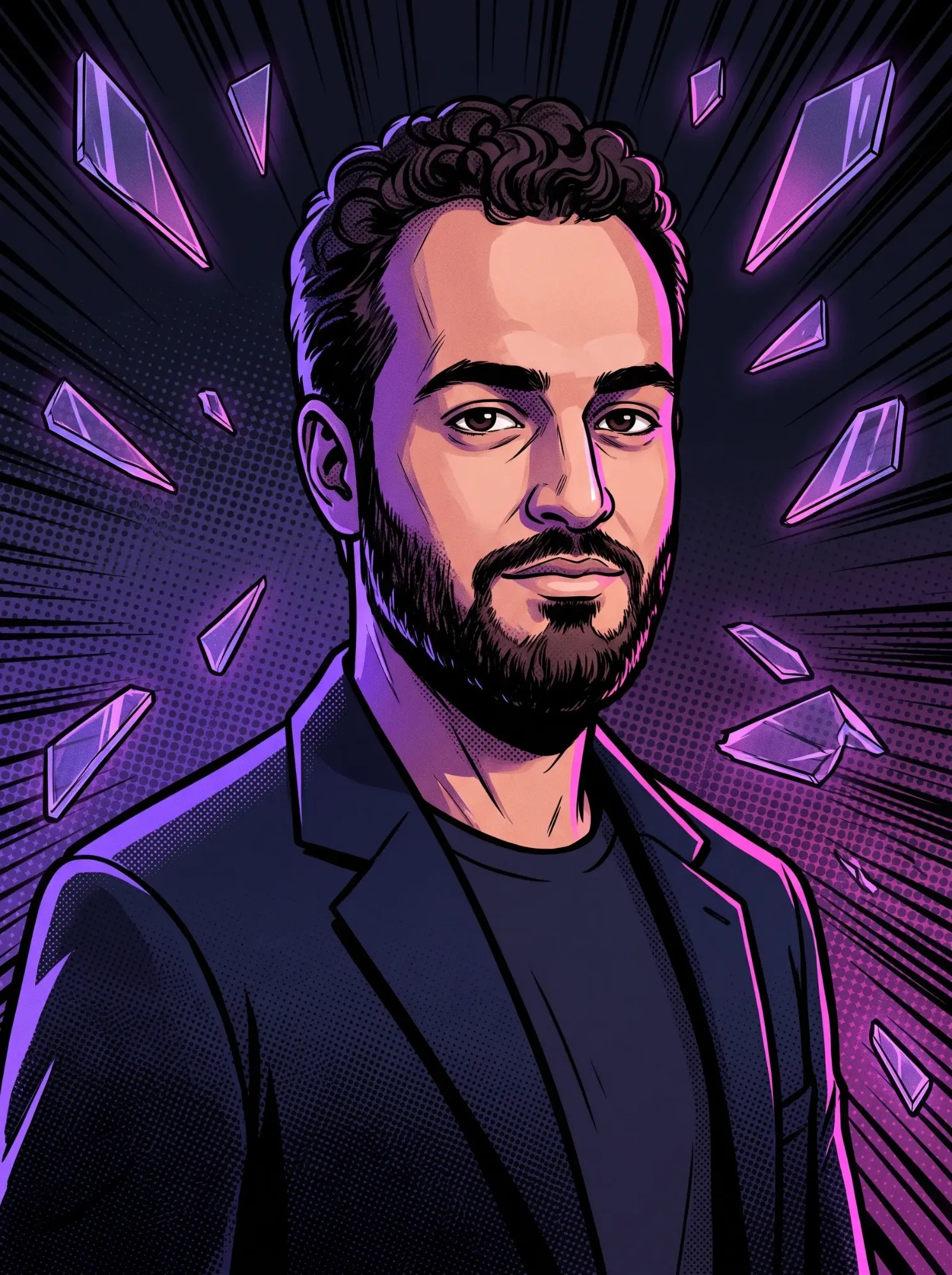
Saeid Ashouri
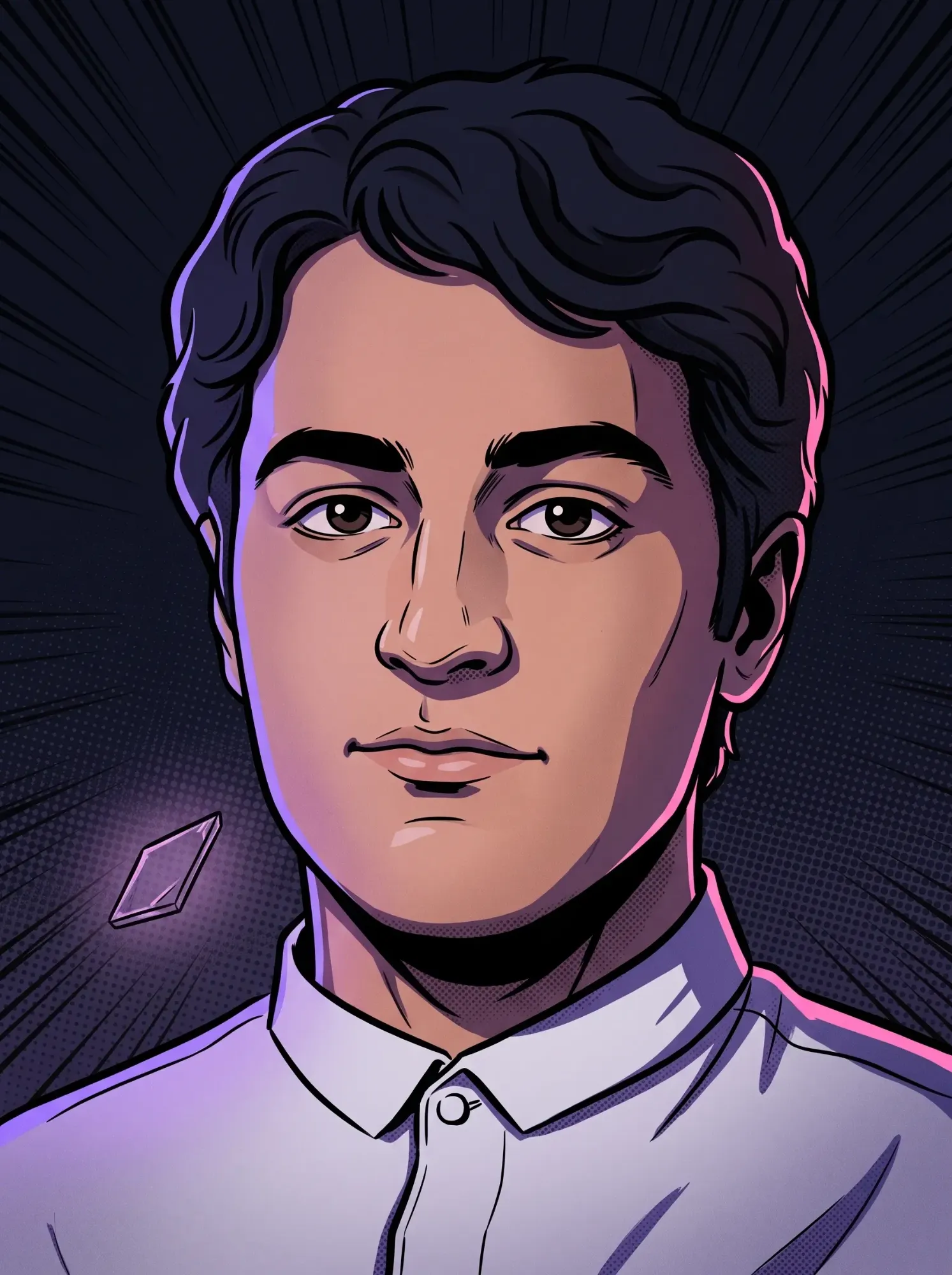
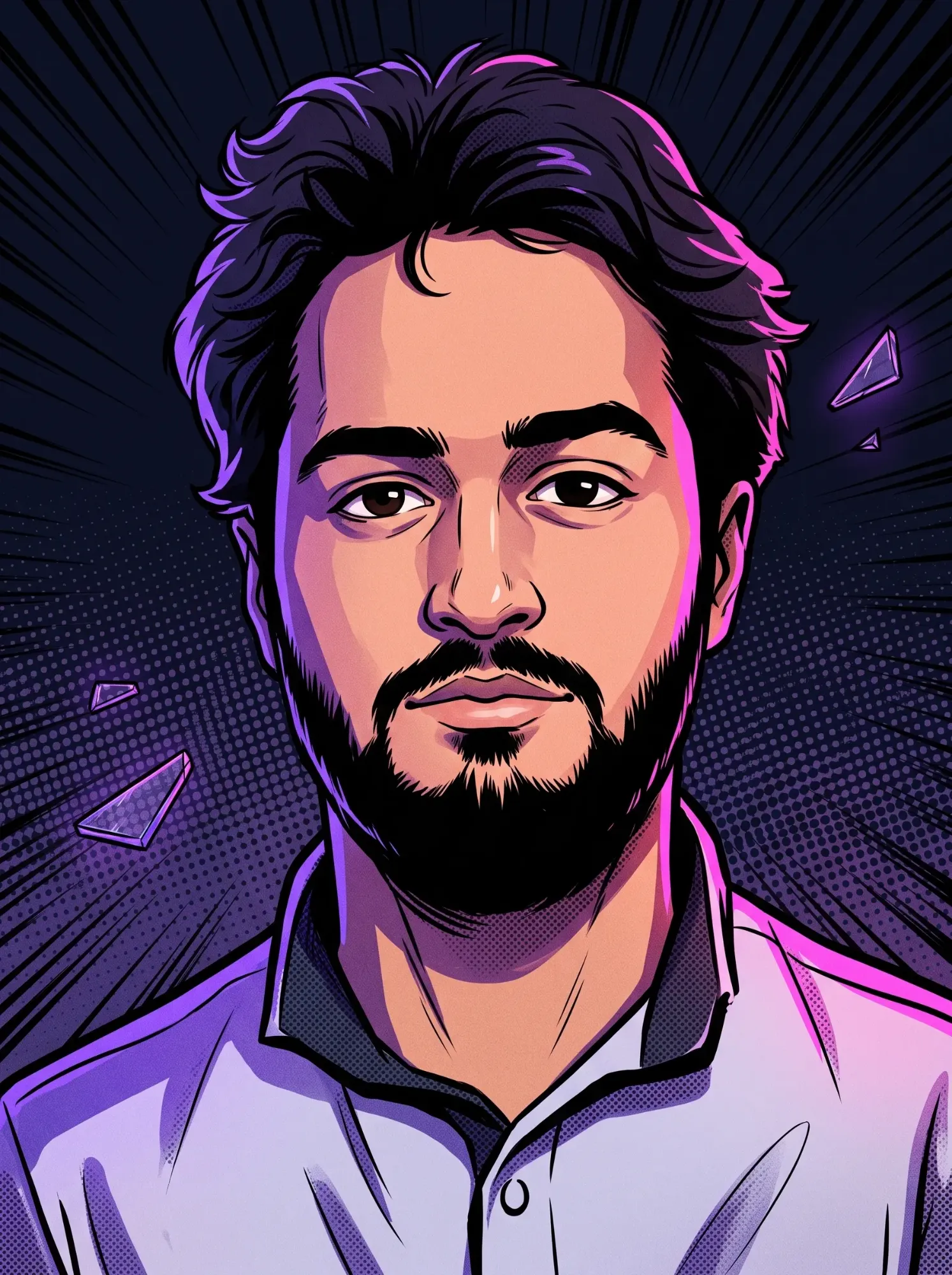
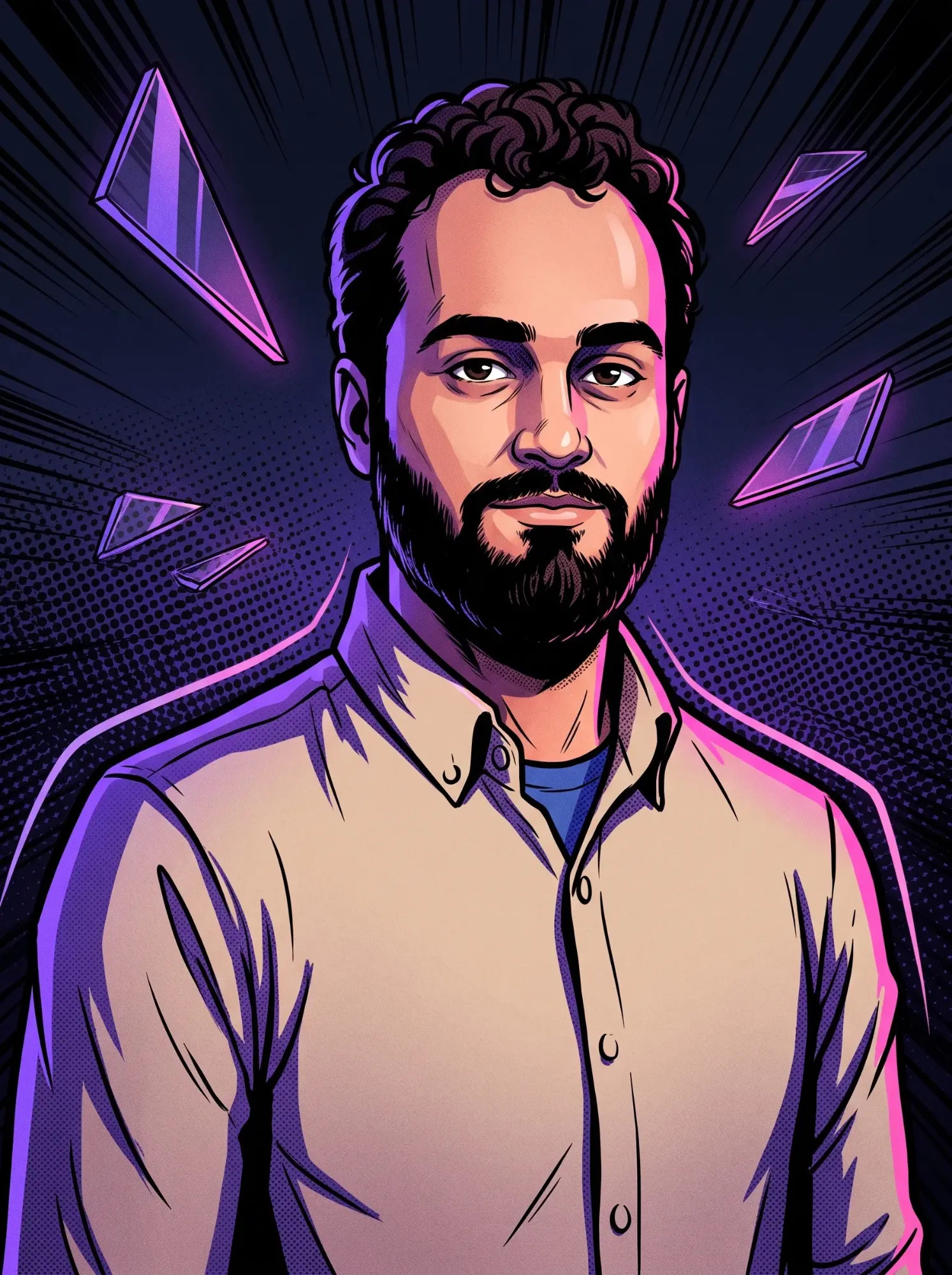
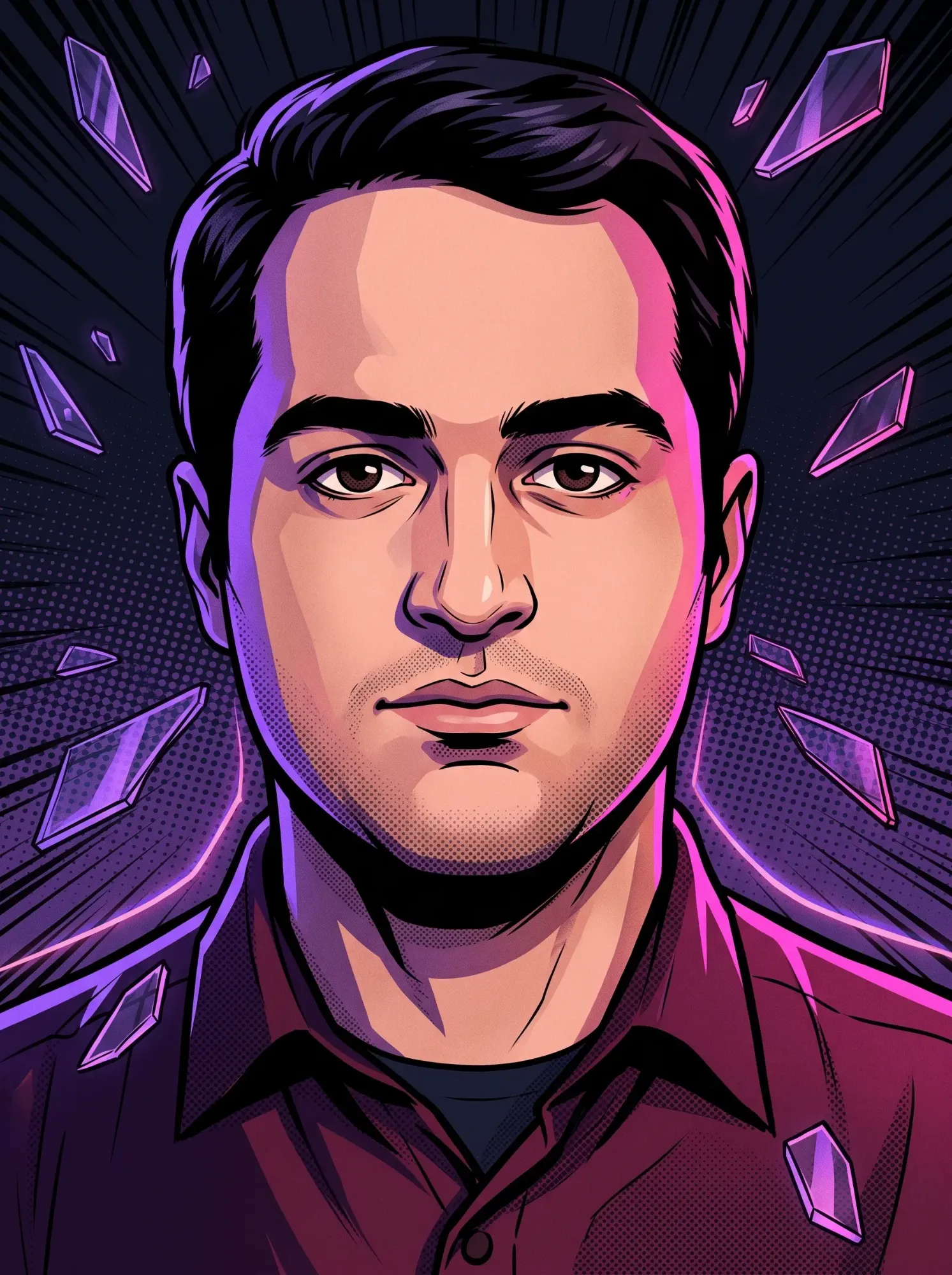
 LV 1
Level 1
Ages 12–15
Party Nobody. This level was played solo
1.1
Language classes and schoolwork filled my days. Back then I set myself one rule. Wherever I was, I wanted to be the best there.
A school foundation · a drive that stayed with me everywhere
1.2
Most kids at my school came from well-off families. I had no place in that crowd, so I filled the quiet with study.
Learning to stand on my own
1.3
I saved my pocket money, and when it reached a decent sum I quietly put it back where it came from. I thought it would make things easier for my family.
A first sense of money · responsibility
1.4
I read philosophy and fiction and kept asking what a complete human being looks like. Some of the answers I found back then are still with me.
The roots of a personal philosophy
1.5
I loved running and swimming, but I turned out to be a good football goalkeeper and made it to the regional games.
1.6
At those same games I broke my wrist, and my time in goal was over.
Level 2
Ages 15–18
Party Family, always behind the scenes
2.1
I missed the cut for the gifted schools and went to an ordinary one. That is where I first learned to build connections with people.
2.2
I ran for the student council and came second.
The first time standing up front and asking for votes
2.3
In the math and physics track, coming first was easy.
2.4
Through these years I played on the football team.
2.5
At sixteen I earned my English language certificate.
A skill that turned into income years later
2.6
Getting ahead so easily made me think the national entrance exam would go the same way. School closed for the last three months, and my result came in far below what I expected.
The first big failure, and a lesson about confidence with nothing behind it · the exam year was all study and no sport
2.7
The day after the exam I became a typist, transcribing recorded memories of war veterans. It was my first paycheck, and the first time I had heard other people's lives this closely.
2.8
Even in hard times, my family paid for one session with an admissions advisor. In the last days a revised list came out, and I got into Avionics at the Civil Aviation Technology College, a full-time program in Tehran. It felt like I had been handed the world.
Level 3
Ages 19–21
Party The college crew · the mentor · the Sahpad team
3.1
On registration day some students complained about the college. I was happy to my core. We quickly became a crew, and the first term turned into the best of my life.
3.2
In high school I only watched others play Mafia. At college I became the game master, good enough that literature and language professors let me run it in class.
Running a room and holding its attention
3.3
In the lab we met someone who taught us electronics by hand. He gave us projects built from his own parts, and talked with us about character, philosophy and personal growth. He was the first person I truly called my teacher.
3.4
COVID arrived and everything we had built shut down at once. It was a hard stretch, and the electronics coursework never stuck the way it should have.
3.5
A classmate brought me into an agricultural drone startup. On day one I wiped desks and bought parts. By the last day I was assembling and programming the aircraft. The startup didn't make it.
Built a real product up close · purchasing and logistics
3.6
I also spent time at another drone company. I learned the market ran mostly on imports, and building agricultural drones, the thing I had in mind, had no place in it.
Understanding a market · clarity about what I didn't want
3.7
I led the college team at the national flying-car design event (Havaro). We designed a passenger air vehicle and made it to the final stage.
3.8
At the mentor's call we set up in a building. We repaired power supplies and chargers, and I apprenticed in laptop repair.
3.9
We lost the building and moved our gear into the college labs. Every day we came in at nine in the morning and left at nine at night. Bit by bit, running Sahpad, the student electronics group the mentor had founded, fell to us.
3.10
I became Sahpad's head of training. I designed and ran courses in drones, electronics and Arduino, and 3D printing and design, with more than fifty students in all. I also tutored privately on the side.
Teaching turned out to be the best way to learn
3.11
We pushed through the college's paperwork and politics. We went to the Kish Airshow on behalf of the Civil Aviation Organization, ran the college booth at the Payam air show, and launched Pixel.
Level 4
Ages 21–23
Party Just our own team, our customers and our suppliers
4.1
My studies fell behind in this stretch. What kept me going was the team and our work.
4.2
We built our first printers from second-hand and scrap parts. We repaired other people's broken printers, and every sale paid for the next machine's parts. Pixel's channel reached 2,500 real followers.
4.3
Our first order shipped in a freezer bag, because we had no boxes and cartons would have killed the margin. We went to see an old master of packaging design whose home was his workshop. It was my first business negotiation, and my hands were shaking.
4.4
A customer wanted a Japanese kanji finished in galaxy-colored epoxy, and the order was accepted before anyone on the team had ever touched epoxy. That same day I took the metro, bought the tools and pigments, and worked the resin by hand. The customer loved it.
A promise had been made, so it had to be kept
4.5
An industrial company wanted a sculpture of one of its late managers. AI couldn't do that yet, so I sculpted the model from a photo in Blender. It led to a large order for boxes in several sizes.
4.6
I meant to lower a print's speed a little and typed one digit wrong. The printer ran at a speed we couldn't believe, and the motors didn't even get warm.
4.7
A group offered to resell our products. Two days later they were posting our content under their own brand. It was the first time I had to end a partnership face to face.
4.8
We signed with the university to build six sectioned training models of the GE90 engine, with separate colors for the hot and cold sections. It was the biggest contract of that period, and we delivered it in two or three months.
4.9
The degree was over, and not everyone was happy about what we were earning. One day we were stopped at the college gate. We went to the director and said that if we couldn't get in, the order couldn't be delivered. We delivered it and agreed to leave the college afterwards. We lost the machines, and the team never managed to gather in one place again.
The first time we stood firm for what was ours · losing the team's base and its machines
4.10
AI had just arrived. We used it for custom technical projects, and at 21 I covered all my own expenses for the first time.
4.11
I swam a lot and taught others too. Our team won the college swimming championship, and I placed fourth individually.
4.12
In these same years I trained with a personal track and field coach.
4.13
Every month we set some money aside to start something later.
4.14
For a week I sold pillows on the metro.
My first face-to-face sales · letting go of shyness
4.15
We entered every student event and competition we could find, including the Afra national school and the Roshd event.
4.16
My bachelor's project was a handheld metal detector for airports. I designed and built it myself and tested a prototype with a 3D-printed body.
4.17
With the mentor's help we negotiated with a car company and won two projects. One was a vehicle black box for determining fault in crashes, the other an AUTOSAR architecture. We took both through feasibility to a first implementation. It took three years, and it paid well enough to put some aside.
Level 5
Ages 24–25
Party The team leaves · a classmate from the University of Tehran · Metsa
5.1
We joined a drone company and worked on an anti-collision system and transmitter and receiver boards.
5.2
After a pitch I gave, we were admitted to Pardis Technology Park and became its R&D unit.
5.3
We had a booth at the Innotex exhibition.
5.4
I tutored an exceptional third grader in English. It paid well, and slowly some savings built up.
5.5
I ran an intensive four-session course inside an organization on building agents and automations with n8n and Make.
5.6
We sat the master's entrance exam in management. One day we sat together and said this same crew would get into the University of Tehran. A few months later a whole row of the Sahpad team was at the top of the college banner.
5.7
Money got tighter, and the team slowly went separate ways.
5.8
With the twelve-day war, everything stopped at once. The automotive projects lost their backing, the team's savings were gone, and the businesses closed.
5.9
I had applied for the Japanese government (MEXT) scholarship, and my savings had gone into preparing the documents. The war cancelled that program too.
5.10
After this fall I could no longer trust. We had talked so much about structure and principles, and still everything had collapsed. That question weighed on my character and my outlook, and I was broken.
5.11
I decided to do nothing but university coursework for a while. It worked. My mind stepped away from all of it, and my GPA went up.
A short refuge that paid off
5.12
The hardest period of my life began. I sent nearly 256 résumés and didn't get a single interview. I took courses, rewrote my résumé and tried every route I could.
5.13
In those months my weight went up a lot. I don't have a car and walk everywhere, and that habit was the only exercise I kept in those days.
Weight went up · walking never stopped
5.14
One of my professors recommended me to a company he was a partner in. For a month I scraped housing market data from the web, presented it in Power BI and wrote a marketing plan for the company. The work was delivered, but the partnership fell apart, and getting my pay took a lot of trouble. It was bitter, but for a month it pulled me off the floor I was on.
My first real data job · a month to breathe
5.15
A classmate from the University of Tehran asked me to come in and talk about an electronics board. I was hired in that meeting and started working with AI. I turned no task down, picked up programming fast and climbed back from zero.
The turning point. Becoming an AI engineer
5.16
I built my first 3D website for the head of that company. A few small sites followed, then freelance projects.
5.17
A freelance algorithmic trading project for the crypto market came in. I spent a month on it and built an arena where twenty agents competed every day on live data. Most of the work was a fight against bias, especially backtest bias, which shows profit on paper and loses in the real market. It made no money, but technically it is one of the heaviest things I have built.
Technical value, no financial return
5.18
A LinkedIn automation project from India had just been approved when the second war began and the internet went down. This time I had learned to take the hit with less damage.
A financial loss · but this time morale held
5.19
I started again, this time by running. Now I run a lot.
5.20
I entered a university track and field race. I didn't make the top places, but I learned where I stand.
5.21
I run a personal podcast channel on Telegram with a handful of listeners.
A place to think out loud
5.22
My entrepreneurship master's coursework is done, and I'm now working on papers and my thesis.
5.23
I left my classmate's company and signed a contracting agreement with Metsa.
5.24
These days I'm building SYNTRA, a market-intelligence layer for investment funds. Every day it collects data on more than 350 funds, ranks them on risk and return and warns before money leaves. In backtests, funds it flagged were twice as likely to face a heavy outflow. It hasn't earned anything yet, and we're presenting it to a few organizations.
Data, financial analysis and product in one piece of work
To be continued
See the rest in the resume, or get in touch if you have something that needs building.